 Image 1 of 1
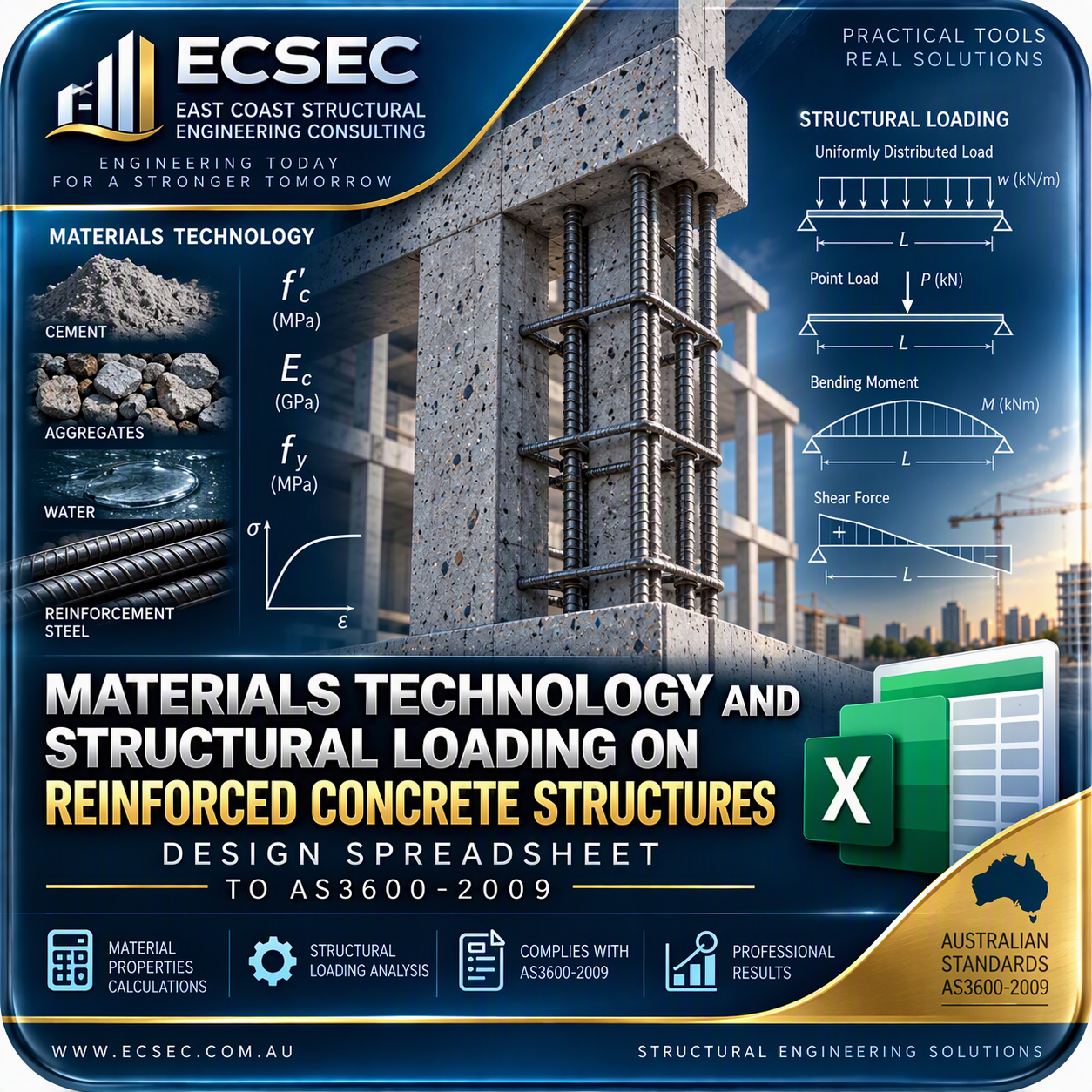
This excel provides the foundation for reinforced concrete design by introducing the properties of concrete and reinforcing steel, together with the loading actions that structures must safely resist. The Excel spreadsheets automate fundamental calculations related to material behaviour, design actions, load combinations, and structural safety principles in accordance with modern reinforced concrete design practice.
✅ Characteristic and design concrete strengths
✅ Reinforcing steel properties and yield strength calculations
✅ Stress-strain relationships for concrete and steel
✅ Modulus of elasticity calculations
✅ Concrete density and unit weight calculations
✅ Material reduction factors and design parameters
✅ Dead load calculations
✅ Live load calculations
✅ Wind load assessment examples
✅ Load combination calculations
✅ Ultimate Limit State (ULS) design actions
✅ Serviceability Limit State (SLS) design actions
✅ Tributary area load calculations
✅ Beam and slab loading examples
✅ Worked examples.
Build a strong foundation in reinforced concrete design with this collection of automated Excel spreadsheets.
This workbook chapter introduces the key material properties of concrete and reinforcing steel and demonstrates how structural loads are determined and combined for design. The spreadsheets automate essential calculations used throughout reinforced concrete design, helping users understand the relationship between material behaviour, structural loading, safety factors, and design actions.
Through practical examples, users can develop a clear understanding of the building blocks of reinforced concrete design before progressing to beams, slabs, columns, footings, and other structural elements.
Understand the mechanical properties of concrete and reinforcement
Calculate design material properties and reduction factors
Determine dead, live, and environmental loads
Apply Ultimate and Serviceability Limit State principles
Develop structural load combinations
Understand the basis of reinforced concrete design
Automate repetitive engineering calculations
Improve design efficiency and accuracy
✔ Fully automated Excel calculations
✔ Transparent formulas for learning and verification
✔ Editable design inputs
✔ Step-by-step worked examples
✔ Suitable for students and practicing engineers
✔ Based on Australian reinforced concrete design principles
✔ Developed by ECSEC Structural Engineering Consultants
Civil Engineering Students
Structural Engineering Students
Graduate Structural Engineers
Design Engineers
Consulting Structural Engineers
Engineers preparing for reinforced concrete design projects
Every reinforced concrete structure relies on a sound understanding of material behaviour and structural loading. This chapter establishes the fundamental concepts used throughout reinforced concrete design, providing the knowledge required to confidently analyse and design beams, slabs, columns, footings, retaining walls, and multi-storey buildings.
Master the fundamentals of reinforced concrete design and transform textbook theory into practical engineering calculations using professionally developed ECSEC Excel tools.
This excel provides the foundation for reinforced concrete design by introducing the properties of concrete and reinforcing steel, together with the loading actions that structures must safely resist. The Excel spreadsheets automate fundamental calculations related to material behaviour, design actions, load combinations, and structural safety principles in accordance with modern reinforced concrete design practice.
✅ Characteristic and design concrete strengths
✅ Reinforcing steel properties and yield strength calculations
✅ Stress-strain relationships for concrete and steel
✅ Modulus of elasticity calculations
✅ Concrete density and unit weight calculations
✅ Material reduction factors and design parameters
✅ Dead load calculations
✅ Live load calculations
✅ Wind load assessment examples
✅ Load combination calculations
✅ Ultimate Limit State (ULS) design actions
✅ Serviceability Limit State (SLS) design actions
✅ Tributary area load calculations
✅ Beam and slab loading examples
✅ Worked examples.
Build a strong foundation in reinforced concrete design with this collection of automated Excel spreadsheets.
This workbook chapter introduces the key material properties of concrete and reinforcing steel and demonstrates how structural loads are determined and combined for design. The spreadsheets automate essential calculations used throughout reinforced concrete design, helping users understand the relationship between material behaviour, structural loading, safety factors, and design actions.
Through practical examples, users can develop a clear understanding of the building blocks of reinforced concrete design before progressing to beams, slabs, columns, footings, and other structural elements.
Understand the mechanical properties of concrete and reinforcement
Calculate design material properties and reduction factors
Determine dead, live, and environmental loads
Apply Ultimate and Serviceability Limit State principles
Develop structural load combinations
Understand the basis of reinforced concrete design
Automate repetitive engineering calculations
Improve design efficiency and accuracy
✔ Fully automated Excel calculations
✔ Transparent formulas for learning and verification
✔ Editable design inputs
✔ Step-by-step worked examples
✔ Suitable for students and practicing engineers
✔ Based on Australian reinforced concrete design principles
✔ Developed by ECSEC Structural Engineering Consultants
Civil Engineering Students
Structural Engineering Students
Graduate Structural Engineers
Design Engineers
Consulting Structural Engineers
Engineers preparing for reinforced concrete design projects
Every reinforced concrete structure relies on a sound understanding of material behaviour and structural loading. This chapter establishes the fundamental concepts used throughout reinforced concrete design, providing the knowledge required to confidently analyse and design beams, slabs, columns, footings, retaining walls, and multi-storey buildings.
Master the fundamentals of reinforced concrete design and transform textbook theory into practical engineering calculations using professionally developed ECSEC Excel tools.